
Package Theft Prevention
How to Protect Package Deliveries When No One Is Home
Sep
If nobody will be home when a package arrives, the safest option is usually to prevent the delivery from being left unattended in the first place. That may mean sending it to a pickup location, requesting a carrier hold, choosing a day when someone will be home, or arranging for a trusted person to retrieve it.
When home delivery cannot be avoided, use a secure package box, clear delivery instructions, and a dependable retrieval plan. Delivery alerts and cameras can help you monitor what happens, but they do not physically protect a package sitting outside.
The right choice depends on how long you will be away, how valuable or replaceable the item is, and which delivery options are available for that particular shipment.
Quick Answer: Choose the Plan That Matches Your Absence
| Situation | Best Starting Option | Backup Plan |
|---|---|---|
| A normal workday | Turn on delivery alerts and arrange prompt retrieval by a household member or trusted neighbor. | Use a pickup location, alternate delivery address, or properly installed package box for recurring deliveries. |
| Overnight or a few days away | Redirect or hold the shipment rather than letting it remain outside until you return. | Use an eligible locker, staffed pickup counter, or trusted person who has agreed to collect it. |
| Vacation or extended travel | Review all expected deliveries before leaving and set up holds or pickup arrangements with each carrier separately. | Ask a trusted person to check for unexpected deliveries and pause avoidable recurring shipments. |
| High-value or hard-to-replace item | Use secure pickup or an appropriate signature requirement so the package is not left unattended. | Choose a delivery date or approved address where someone can accept it. |
Match the Delivery Plan to How Long You Will Be Away
When You Are Away for a Normal Workday
A workday absence usually creates a timing problem rather than a long-term storage problem. Your goal is to shorten the period between delivery and retrieval.
Start by enabling shipment notifications. When possible, arrange for a household member or trusted neighbor to bring the package inside soon after delivery. If nobody can retrieve it, consider sending the order to an eligible pickup location or another approved address before it ships.
If unattended deliveries are a recurring part of your routine, create a permanent system instead of solving each package individually. That system might combine current delivery-account settings, one clearly designated drop-off location, and a package box that drivers can find and use.
When You Are Away Overnight or for a Few Days
A package that sits outside for several days can advertise that nobody is home. It is also exposed to weather, animals, accidental damage, and misdelivery problems that may go unnoticed.
For a short trip, a carrier hold or pickup location is usually safer than relying on a delivery estimate. Estimated dates can change, and a delayed shipment may arrive after you leave. Check the actual tracking page and available delivery-management options before departure.
If a trusted person will collect the package, make sure they know which delivery you expect, where drivers normally leave packages, and how they should contact you if the package does not appear.
When You Are Going on Vacation
Vacation planning should cover more than USPS mail. A USPS Hold Mail request does not control packages delivered by UPS, FedEx, Amazon, or another private delivery network. Review every expected order and identify the carrier handling it.
Before leaving:
- Review retailer accounts, shipment emails, and tracking apps for pending orders.
- Pause or postpone recurring shipments that you do not need while traveling.
- Set up carrier holds or pickup requests for eligible packages.
- Check pickup deadlines to make sure the package will not be returned before you get home.
- Ask a trusted person to watch for unexpected or ineligible deliveries.
- Confirm that any package box has enough capacity for the deliveries that may arrive.
Do not assume that one account setting will cover every shipment. Carrier options, shipper restrictions, package contents, and delivery method can all affect whether a hold or redirect request is available.
When the Package Is Valuable or Difficult to Replace
For an expensive phone, computer, camera, jewelry purchase, prescription, important document, or irreplaceable item, convenience should not be the deciding factor. Choose a method that keeps the package in controlled custody until you or an authorized person receives it.
Secure pickup is often the clearest option. A signature requirement can also help, but only if someone will be available to sign. Otherwise, it may lead to a missed attempt, redelivery, or pickup requirement. Check the shipment details because the seller or shipper may control which delivery changes are permitted.
Need a repeatable plan? The Complete Porch Pirate Protection Toolkit includes Vacation & Holiday Delivery Planning Tools, a High-Value Package Plan, a Household Package Routine Planner, and delivery-account and package-box decision tools.
Keep the Package Off the Porch When Possible
The most reliable way to protect a delivery while nobody is home is to remove the unattended doorstep from the process. Several options can accomplish that, but availability varies by order and carrier.
Use a Carrier Hold or Pickup Location
A carrier hold keeps an eligible shipment at an approved location instead of leaving it at your home. This can be useful for workdays, travel, missed signature deliveries, and expensive purchases.
Request the change as early as possible. Once a package is out for delivery, certain options may disappear or take effect too late. A shipper may also block redirects or holds for fraud prevention, high-value goods, restricted contents, or other reasons.
Choose a Retailer Locker or Store Pickup
When the retailer offers a locker, staffed counter, or store pickup option during checkout, choosing it before shipment can be simpler than rerouting the package later. Confirm the location’s hours, identification requirements, package-size restrictions, and collection deadline.
A locker is especially helpful when you know your work schedule will prevent prompt retrieval at home. It is less useful when you will still be traveling when the pickup period expires.
Use a Trusted Alternate Address
You may be able to send an order to a trusted relative, friend, neighbor, or another address where someone can receive it. Always obtain permission first and make sure the name and address comply with the seller’s and carrier’s requirements.
Workplace delivery can also be practical, but only when your employer allows personal shipments. Some workplaces prohibit them, limit package size, require delivery to a central receiving area, or will not accept responsibility for missing items.
Current Package Hold, Rerouting, and Pickup Options
Carrier information reviewed September 17, 2026. Services, eligibility, fees, and holding periods can change. Confirm the available options for the individual shipment before relying on them.
| Carrier or Retailer | Current Option | Important Limitation |
|---|---|---|
| USPS | USPS Hold Mail can hold USPS mail at the local Post Office for a minimum of 3 days and a maximum of 30 days. USPS Informed Delivery can provide package-status information. | The request applies to USPS mail for the address. It does not stop deliveries handled by other carriers. |
| UPS | UPS My Choice provides alerts and eligible delivery-management choices. UPS says UPS Store and Access Point locations can hold packages for up to 7 calendar days; customer centers can hold them for up to 5 business days. | Available changes depend on the shipment, shipper restrictions, destination, membership level, and other eligibility rules. Some changes may involve fees. |
| FedEx | FedEx Delivery Manager Vacation Hold can pause eligible FedEx Express and FedEx Ground deliveries to a residential address for up to 14 days. | Only eligible services and shipments are covered. A separate Hold at Location option may be available for an individual package. |
| Amazon | Eligible Amazon orders can be sent to an Amazon Locker or pickup location. Amazon says Locker packages generally must be collected within 3 calendar days. | Eligibility can depend on package size, weight, value, item type, seller, and shipping method. Follow the deadline in the pickup notification. |
If the Package Must Be Delivered to Your Home
Sometimes a package cannot be redirected, the pickup locations are inconvenient, or home delivery is the only available option. In that situation, combine several practical measures instead of relying on one.
If the normal drop-off area is exposed or confusing, use the Secure Package Delivery Guide to choose a safer location before updating your instructions.
If your deliveries go through a shared lobby, package room, or front desk, see our guide to preventing package theft in an apartment or condo to check building access, approved handoff locations, and locker overflow arrangements.
Turn On Delivery Alerts
Enable notifications for expected, out-for-delivery, delivered, delayed, and rescheduled events. Alerts are most useful when they trigger an action: you leave work at the expected time, notify a household member, contact the neighbor who agreed to help, or verify that the package reached the correct location.
An alert does not protect the package by itself. If nobody can respond to it, choose a more secure delivery method.
Provide Clear Delivery Instructions
Use one specific, safe, and easy-to-find location. A useful instruction identifies the exact place and a visible landmark, such as:
Please leave packages inside the gray delivery box beside the front steps and close the lid.
Avoid vague requests such as “hide the package” or directions that require a driver to enter an unsafe, dark, obstructed, or private area. Delivery instructions are requests rather than guarantees, and carrier rules or conditions at the property may affect where the package is left.
For carrier-specific examples, see Package Delivery Instructions: What to Write for Amazon, UPS, FedEx & USPS.
Use a Package Delivery Box
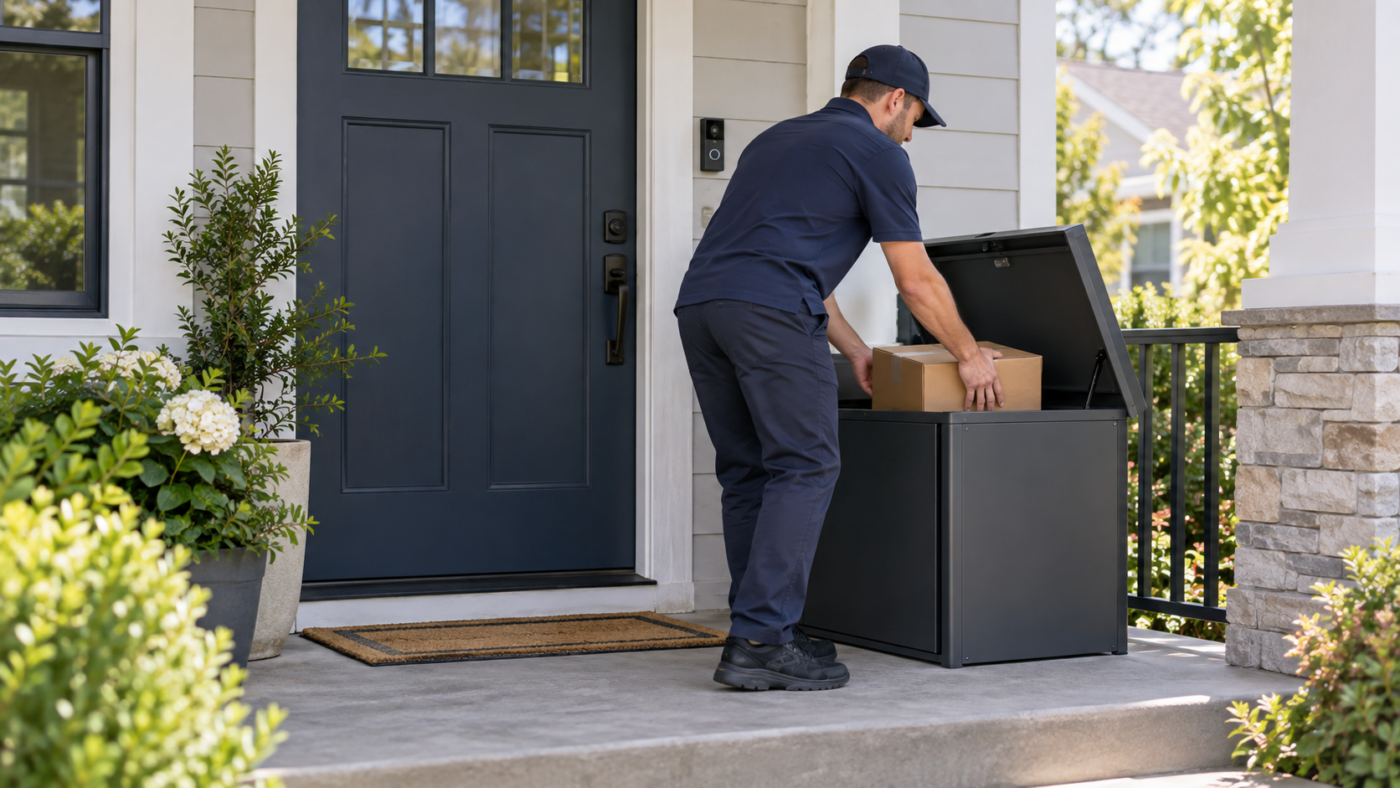
A properly chosen and anchored package box is one of the few home solutions that can physically reduce access to a delivered package. It can also shield deliveries from street view and weather.
The box must be large enough, easy for the driver to identify, accessible from the normal delivery route, and simple to use. If it is hidden, full, confusing, or too far from the driver’s normal path, packages may still be left beside it.
Before buying one, review Package Lock Boxes for Deliveries. If you already own one, use the steps in How to Get Delivery Drivers to Use Your Package Delivery Box.
Use Signature-Required Delivery Selectively
A signature requirement can prevent an eligible high-value shipment from being left unattended, but it is not the best choice for every order. When nobody is home, the carrier may make another attempt, leave a notice, or direct the package to a pickup location.
Use this option when the cost or difficulty of replacing the item outweighs the inconvenience of arranging a handoff or pickup. Verify who is permitted to sign and whether the sender has restricted delivery changes.
What Cameras and Video Doorbells Can—and Cannot—Do
A camera or video doorbell can help you:
- Receive motion or delivery alerts.
- Confirm where the driver left the package.
- Monitor the delivery area remotely.
- Save evidence if a package disappears.
It cannot stop someone from picking up an exposed package. Even a clearly recorded theft still leaves you dealing with the seller, carrier, payment provider, insurer, or police afterward.
Use cameras as one monitoring layer alongside a method that reduces exposure, such as prompt retrieval, secure pickup, a less-visible delivery zone, or a package box. If monitoring is part of your plan, make sure the camera actually sees the package location by following the camera placement guide for package theft.
Build a Backup Plan for Unexpected Deliveries
Even a well-planned delivery can change. A shipment may arrive early, be delayed until after your departure, switch carriers during fulfillment, become ineligible for redirection, or be left somewhere other than the requested location.
Your backup plan should answer these questions:
- Who can retrieve a package if it arrives unexpectedly?
- What will you do if a hold or redirect option is unavailable?
- Can the package box handle more than one delivery?
- Who will check alternate doors, the garage area, mailroom, front desk, or parcel locker?
- How will you respond if the delivery photo does not show your property?
- What happens if your trip is extended beyond the pickup deadline?
Save order confirmations and tracking information for important deliveries. If a package is marked delivered but cannot be found, start with what to check when tracking says delivered but the package is missing. If the available evidence indicates theft, use My Package Was Stolen—What Do I Do Now? for the recovery steps.
Before You Leave: Package Delivery Planning Checklist
- ☐ Check every open order and expected delivery date.
- ☐ Identify the actual carrier for each shipment.
- ☐ Turn on carrier and retailer notifications.
- ☐ Choose hold, pickup, locker, alternate address, or home delivery for each important package.
- ☐ Confirm eligibility, identification requirements, fees, and pickup deadlines.
- ☐ Pause avoidable recurring shipments.
- ☐ Confirm arrangements with a trusted neighbor or household member.
- ☐ Update delivery instructions and remove outdated directions.
- ☐ Empty and inspect the package box, if you use one.
- ☐ Test the camera view, alerts, and recording settings.
- ☐ Create a backup plan for delays and unexpected deliveries.
For a broader review of your delivery setup, use the Home Delivery Security Checklist.
If you are unsure which weaknesses need attention first, take the free 15-Minute Porch & Package Security Checkup to prioritize improvements before your next absence.
Frequently Asked Questions
Can I Put All My Packages on Hold While I Am on Vacation?
There is no single hold request that controls every carrier. USPS, UPS, FedEx, Amazon, retailers, and other delivery services operate separately. Review each expected shipment and use the option offered for that carrier and package.
Where Can I Send a Package Instead of My Home?
Depending on the retailer and carrier, possible alternatives include a carrier pickup location, eligible package locker, participating retail counter, store pickup, staffed apartment office, workplace that permits personal deliveries, or the address of a trusted person who has agreed to receive it.
What Happens to a Signature-Required Package if Nobody Is Home?
The carrier may make another delivery attempt, leave a notice, or hold the package for pickup. The exact process depends on the carrier, service, signature type, and sender restrictions. Check the tracking page rather than assuming the package will be left.
What Should I Do if a Package Will Arrive After I Leave?
Open the carrier’s tracking or delivery-management page as soon as possible. Look for an eligible hold, pickup, date-change, or redirect option. If no change is available, contact the seller or arrange retrieval by a trusted person. Do not wait until the package is already out for delivery if you can avoid it.
Is a Camera Enough to Protect an Unattended Package?
No. A camera can alert, monitor, deter, and document, but it does not physically secure a package. Combine it with prompt retrieval, secure pickup, a package box, or another method that reduces or eliminates unattended exposure.
Bottom Line
When you know nobody will be home, plan the receiving method before the package reaches the porch. For an ordinary workday, alerts and prompt retrieval may be enough. For a short trip or vacation, use holds, pickup locations, lockers, or a trusted person. For high-value deliveries, choose secure pickup or an appropriate handoff requirement.
If home delivery must continue, use clear instructions and a package box that drivers can find. Treat cameras and doorbells as monitoring tools, not as substitutes for physical protection.
The safest plan is the one that keeps the package from sitting outside without a dependable person or secure container ready to receive it.
For a broader overview beyond periods when nobody is home, read How to Prevent Package Theft: 12 Practical Ways to Protect Deliveries.
For a complete strategy plus the planning worksheets needed to implement it, see the Porch Pirate Protection Guide + Complete Toolkit Bundle.