

Package Theft Prevention
Do Fake Security Cameras Deter Porch Pirates?
Oct
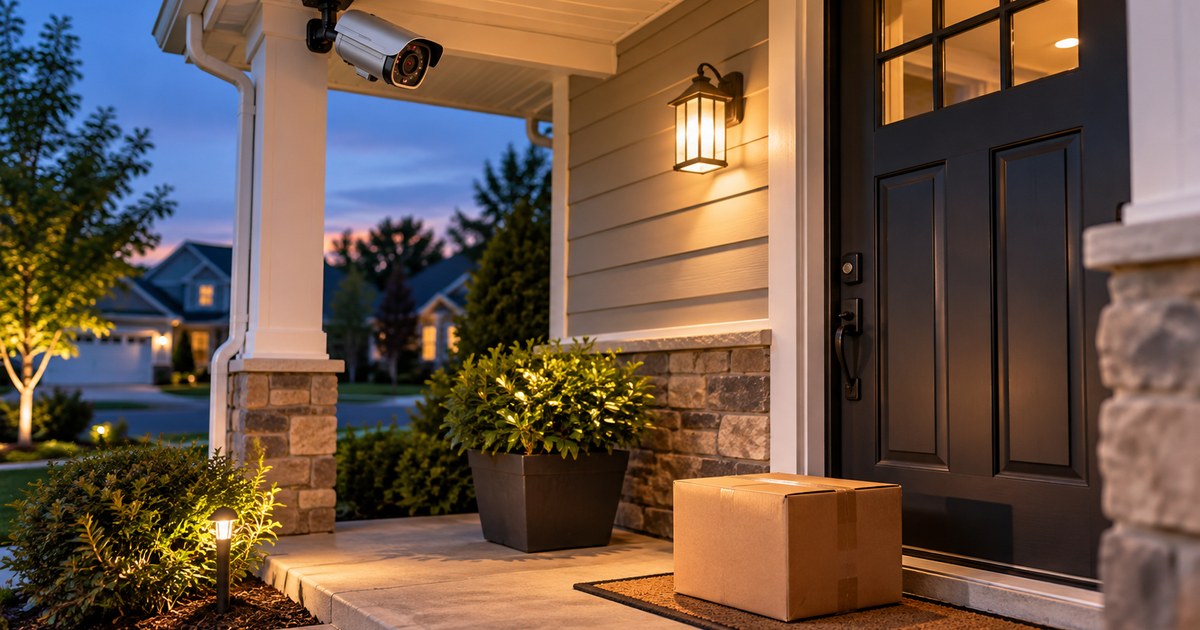
Short answer: A fake security camera may deter some porch pirates by making a home look monitored, especially if the theft is impulsive and the camera appears convincing. But a dummy camera does not actually monitor anything. It cannot record video, send an alert, show a live view, detect a package, or help identify a thief after a theft.
That makes a fake camera a limited visual deterrent—not a substitute for a working camera or other practical package-security measures. Research on real CCTV finds modest, context-dependent crime-reduction benefits and stronger results when cameras are actively monitored or combined with other measures. Direct, high-quality evidence specifically showing that fake cameras prevent porch theft is limited.
What Is a Fake Security Camera?
A fake security camera—also called a dummy, decoy, or simulated camera—is a nonworking device made to resemble a real surveillance camera. Its purpose is to create the impression that a porch, doorway, garage, or walkway is being watched.
Some models copy the appearance of familiar bullet, dome, or pan-and-tilt cameras. They may include a mock lens, imitation infrared lights, a short cable, a blinking LED, or a solar panel intended to make the unit look functional.
Other products combine a faux camera housing with a real solar-powered or motion-activated light. In that case, the lighting can provide a useful function even though the “camera” does not capture footage.
The key distinction is simple:
- A fake camera creates the appearance of surveillance.
- A real camera captures images or video and may also provide alerts, live viewing, two-way audio, person detection, or package detection, depending on the device and service plan.
Can Fake Cameras Deter Porch Pirates?
They can sometimes—but there is no guarantee.
Why Visible Deterrence May Help
Porch theft is often an opportunity-based crime. A person sees an unattended package, decides the risk looks low, and takes it quickly. A clearly visible camera-shaped device may change that risk calculation if the person believes it is recording.
That basic psychology is plausible. Research involving surveillance and visible guardianship suggests that the appearance of being watched may discourage some offenders. However, frequent or determined thieves may be less influenced by visible security cues.
Appearance Is Not Monitoring
A fake camera can only influence what a potential thief believes. It cannot respond if that belief fails.
This is the difference between:
- Making a property appear monitored: The device may cause hesitation or encourage an opportunistic thief to choose another target.
- Actually monitoring the property: A working system can capture an event, notify the resident, support live viewing, and preserve footage, depending on its features and settings.
No homeowner can know whether a particular porch pirate will notice a dummy camera, believe it is real, or care about being seen. Some thieves conceal their faces, move too quickly to inspect the device, or simply accept the risk.
For that reason, a fake camera should be viewed as a possible visual deterrent—not proven protection against package theft.
Advantages of Fake Security Cameras
Dummy cameras have several practical advantages when their limited purpose is understood.
- Low purchase cost: A nonrecording device is generally inexpensive because it lacks imaging, storage, networking, and app functions.
- Simple installation: Many models only need to be mounted.
- No Wi-Fi required: A basic dummy camera does not depend on home internet coverage.
- No subscription: There is no cloud-video plan because no video is created.
- No app setup: There are no notifications, zones, accounts, or device permissions to configure.
- Visible deterrence: A convincing, visible unit may make an opportunistic thief think the area is recorded.
- Potentially useful lighting: Combination products may include a real solar or motion-activated light even when the camera housing is simulated.
These benefits mainly involve price and convenience. They do not give the homeowner information, evidence, or control during or after an incident.
Major Disadvantages of Fake Cameras
No Recorded Evidence
A dummy camera captures nothing. It cannot preserve a face, clothing, vehicle, direction of travel, delivery time, or sequence of events.
Even a real camera does not guarantee useful identification because image quality, lighting, angle, obstructions, and the thief’s clothing all matter. A fake camera, however, has no chance of producing evidence because no recording exists.
No Notifications or Live View
A fake camera cannot notify your phone when someone enters the porch, let you check the doorway remotely, or support two-way communication.
Working video doorbells and security cameras commonly offer motion notifications and live viewing, although recording and advanced detection features may depend on the product or service plan.
See our guide to Security Cameras for Porch Protection for working camera options and placement considerations.
No Package Detection
Some real doorbells and cameras can recognize a package in their field of view and send a notification. A camera-shaped decoy has no sensor or software to perform that task.
Some Thieves May Spot the Fake
An obvious dummy may provide little deterrent value. Cheap-looking materials, implausible placement, exaggerated blinking lights, missing wiring, or a device pointed away from the approach can undermine the impression that the area is genuinely monitored.
False Confidence
The largest practical risk is not simply that the device does nothing. It is that the homeowner behaves as though it does more than it can.
A resident might skip better delivery instructions, leave a high-value package exposed longer, or decide against a working camera because the porch already “looks protected.”
A dummy camera is safest when treated as a small visual layer—not as the system protecting the package.
Fake vs. Real Security Cameras
| Feature | Fake Security Camera | Real Security Camera or Video Doorbell |
|---|---|---|
| Upfront cost | Usually very low | Usually higher |
| Installation | Usually minimal mounting | May require charging, wiring, Wi-Fi, an app, or camera alignment |
| Recording | None | Usually available; storage method varies |
| Alerts | None | Motion, person, doorbell, package, or other alerts may be available |
| Remote viewing | None | Commonly available through an app |
| Evidence after theft | None | May provide useful footage if the event is captured clearly |
| Deterrence | Appearance only; uncertain | Visible deterrence plus actual surveillance capability |
| Subscription | None | Varies by product and features |
| Package-theft usefulness | Limited supplemental visual cue | Useful for awareness, documentation, live checking, and possible deterrence |
A real camera still does not physically secure a package. Its advantage is that it can create real information and evidence while also providing the same visible surveillance cue that a fake camera tries to imitate.
Why Motion Lighting May Help More
If the choice is between a nonworking camera and a functional motion light, the light often provides the more dependable everyday benefit. It changes the environment whether or not an approaching person believes a surveillance claim.
Motion lighting can:
- Reduce dark hiding areas: Lighting makes the porch, steps, walkway, and package location easier to see.
- Make approaching people more visible: Occupants and neighbors may notice movement that would otherwise blend into darkness.
- Improve camera visibility: Better illumination may help a working camera capture more useful detail.
- Provide an immediate visual cue: A light switching on can draw attention to activity around the porch.
- Complement other security measures: Lighting can support a real camera, package box, delivery sign, and better package placement.
For more information, see our guide to Motion Lighting for Porch Security.
How to Use a Fake Camera More Effectively
If a fake camera fits your budget or rental situation, use it as a visual supplement rather than guaranteed security.
- Place it where an approaching person can see it. A device hidden under an eave may not influence anyone’s decision.
- Point it toward the actual approach and package area. Implausible positioning weakens the effect.
- Avoid obviously unrealistic models. Poor materials or exaggerated lights can advertise that the device is a decoy.
- Pair it with real motion lighting. The light provides an actual security benefit.
- Keep packages out of street view. Ask drivers to use a less-visible permitted delivery location when possible.
- Use it as one layer. Combine it with delivery alerts, prompt pickup, a trusted neighbor, a secure package box, or carrier pickup options.
- Never rely on it to document theft. If evidence, alerts, or live viewing matter, install a real camera.
- Keep security claims accurate. Do not claim that video is being recorded or professionally monitored when it is not.
Better Package-Theft Protection Options
The strongest approach reduces both opportunity and the amount of time a package remains exposed instead of relying on a thief being fooled.
Real Video Doorbells
A video doorbell places a working camera at the main delivery point. Depending on the product and plan, it may provide motion alerts, live view, two-way talk, recording, and package notifications.
Outdoor Security Cameras
An outdoor camera can cover a wider porch, walkway, driveway, or side entrance than a doorbell alone. Position it high enough to resist easy tampering but at an angle that can still capture useful identifying detail.
See Security Cameras for Porch Protection for additional guidance.
Motion Lighting
Lighting improves visibility around the delivery area and can reinforce the presence of a working camera. Unlike a fake camera, it continues to provide a real benefit regardless of whether anyone believes they are being watched.
Learn more in our Motion Lighting for Porch Security guide.
Secure Package Boxes
A package box can remove an item from plain sight and, when properly designed and used, make a quick grab more difficult. Check that the opening fits typical deliveries, the box can be anchored, and the delivery instructions are easy for drivers to understand.
See our guide to Package Lock Boxes for Deliveries.
Better Package Placement
A package that cannot easily be seen from the street is a less obvious target. When permitted, use carrier delivery preferences to request a side-door, rear-door, concealed, or other safer delivery location.
Our Package Delivery Instructions for Amazon, UPS, FedEx & USPS guide explains how to set up better delivery preferences.
Carrier Alerts and Pickup Options
Turn on tracking notifications and retrieve deliveries promptly. When an expensive item will arrive while nobody is home, a carrier location, locker, hold-for-pickup option, or trusted neighbor may eliminate unattended porch time entirely.
Delivery Signs and Decals
A clear delivery sign can tell drivers where you want packages placed—for example, behind a porch column or inside a package box. A surveillance decal may provide an additional visible deterrence cue, but it should not replace measures that actually hide, monitor, or secure deliveries.
Are Fake Security Cameras Worth It?
A fake security camera can be worth considering when the goal is narrowly defined: create a low-cost, visible suggestion that a porch may be monitored.
It may discourage an opportunistic thief who notices it, believes it, and wants an easier target.
It is not a good substitute for a working camera when you want video evidence, phone alerts, live viewing, package detection, or help identifying someone after a theft.
The more valuable or frequent your deliveries—and the longer they sit unattended—the harder it is to justify relying on appearance alone.
For most homes, a practical order of priorities is:
- Reduce the time packages remain outside.
- Keep deliveries out of sight or use secure pickup.
- Add effective motion lighting.
- Use a working camera if monitoring or evidence matters.
- Treat a fake camera or surveillance decal, if used at all, as a supplemental visual cue.
How Secure Is Your Porch Right Now?
Not sure which improvements would make the biggest difference at your home? Use our free 15-minute porch and package security checkup to identify weak points and practical improvements.
Frequently Asked Questions
Do fake security cameras record anything?
No. A true fake or dummy camera has no working image sensor or recording system. Some camera-shaped products include a functional light, but that does not mean they capture video.
Can a fake camera send motion alerts?
No. A dummy camera cannot send phone notifications or support live viewing. A combination unit may switch on a real motion-activated light, but that is different from detecting, recording, and reporting a person or package.
Will a fake camera stop every porch pirate?
No. It may influence an opportunistic thief who believes it is real, but deterrence depends on whether the person notices the device, believes it works, and cares about the risk.
Is a blinking red light more convincing?
Not necessarily. Some real cameras have status lights while others do not. An exaggerated or constantly blinking light can actually make a low-quality dummy camera easier to recognize as fake.
Is a fake camera better than no deterrent?
Possibly, if it is visible and convincing, but its benefit cannot be guaranteed. A real motion light may provide more reliable practical value because it actually improves visibility, while a working camera adds alerts, monitoring, and potential evidence.
Do real cameras prevent package theft?
They may deter some offenders, but they do not guarantee prevention. Research on CCTV generally finds modest and context-dependent crime-reduction benefits. Real cameras are clearly more capable than decoys because they can provide monitoring and evidence even when deterrence fails.
What is the most effective way to protect a package?
Avoid leaving it visible and unattended whenever possible. Use tracking alerts, prompt retrieval, safer placement, a secure package box, a trusted neighbor, a locker, or carrier hold options.
Bottom Line
A fake security camera may make a porch look protected, but looking protected and actually being protected are two different things.
If a dummy camera causes an opportunistic thief to move on, it has served its limited purpose. But because it cannot record, alert, identify, or secure anything, it should never be the main package-theft protection strategy.
For most homeowners, better results are likely to come from combining good delivery placement, prompt pickup, motion lighting, a working security camera or video doorbell, and a secure package location.
Sources & Further Reading
- U.S. Department of Justice / Office of Justice Programs — research reviews on CCTV surveillance and crime prevention.
- College of Policing — research on closed-circuit television and crime reduction.
- Research examining porch pirates’ perceptions of opportunity and visible security measures.
- Google Nest — documentation for package alerts and camera detection.
- USPS — Mail Theft FAQs, Delivery Instructions, Hold for Pickup, and Smart Locker information.
- FedEx — Delivery Manager and Hold at Location information.
- UPS — My Choice delivery-management and pickup-location information.
Security equipment and delivery options vary by product, carrier, location, service plan, and installation. No single device can guarantee that package theft will be prevented.