
Package Theft Prevention
How to Prevent Package Theft in an Apartment or Condo
Sep
Package theft in an apartment or condo is not simply a porch problem. A delivery may be left outside a locked entrance, in an open lobby, inside a shared package room, beside a bank of full lockers, or outside your individual unit.
That means the best solution depends on where the package becomes vulnerable. It also depends on what you control as a resident and what can be changed only by a landlord, property manager, concierge, or condo association.
You may not be allowed to drill into a wall, mount a camera in a hallway, install a package box, or change the building’s access system. You can still reduce risk by choosing the safest available handoff point, using accurate delivery instructions, retrieving packages quickly, and creating a different plan for high-value or away-from-home deliveries.
Why Package Theft Is Different in an Apartment or Condo
At a single-family home, the resident often controls the porch, lighting, camera placement, delivery box, and preferred drop-off location. In a multi-unit building, several parts of the delivery process may be shared or controlled by someone else.
Apartment and condo deliveries can involve:
- A locked exterior entrance that a driver cannot access
- A lobby used by residents, visitors, contractors, and delivery workers
- A mail area or package room serving many households
- A front desk with limited hours or package-acceptance rules
- Package lockers that can fill during busy periods
- Hallways where packages are left outside individual units
- Building rules governing cameras, doorbells, signs, mounting, and common areas
The goal is therefore not to copy a homeowner’s porch setup. It is to find the most secure delivery path your building supports and create a backup for packages that should not be left unattended.
First, Identify Where Your Package Becomes Unsecured
Before buying equipment or changing account settings, determine where your deliveries are actually being left. Review recent delivery photographs, tracking details, building notifications, and your own experience with different carriers.
Look for a pattern rather than judging the system from one unusual delivery.
Outside the main entrance
If packages are being left on the sidewalk, front steps, or outside a locked vestibule, the driver may not know how to enter or may not have access to the approved delivery location.
Your first step is to confirm the building’s official delivery procedure. Find out which entrance carriers should use, whether they should call through an intercom, and whether a front desk, office, locker, or package room accepts deliveries. Then make your carrier and retailer instructions match that procedure.
If the building cannot provide a dependable interior handoff, use an off-site pickup or hold option for packages that matter.
In an open lobby or mail area
An interior lobby may protect packages from weather and street visibility, but it does not automatically make them secure. Residents, guests, contractors, and anyone admitted through the entrance may be able to reach them.
Ask whether the building offers a more controlled location. That might be an individual locker, staffed front desk, locked package room, or management office. If no better location exists, delivery alerts and fast retrieval become especially important.
Inside a shared package room
A locked package room can reduce exposure to the public, but its performance depends on how access, notifications, shelving, oversized deliveries, and overflow are handled.
Check whether packages are frequently left outside the room, placed under the wrong name, or buried during busy periods. Find out who can enter and what residents should do when a package is marked delivered but cannot be found.
If theft or missing-package problems recur, record the dates, carriers, reported delivery locations, and where the packages were eventually found. A documented pattern is more useful when discussing the problem with building management than a general statement that the room feels unsafe.
Beside full lockers or in an overflow area
Package lockers protect only the deliveries placed inside them. A full system, oversized package, carrier access problem, or scanning error may send a package to an open shelf, lobby floor, or unmonitored overflow area.
Learn what your building expects when lockers are full and where oversized items are supposed to go. If the overflow location is regularly unsecured, use another delivery method for valuable or time-sensitive purchases.
Outside your apartment or condo door
Direct-to-unit delivery may avoid a crowded lobby, but it can leave the package unattended in a shared hallway. The risk depends on building access, hallway traffic, how long the package remains there, and whether monitoring is permitted.
Use delivery alerts and retrieve the package promptly. If your building permits a video doorbell or door-area camera, it may improve notification and documentation. It does not prevent someone with hallway access from taking an exposed package.
Use the Most Secure Building Option Available
Start with options that are already approved and supported by the property. A building-provided system is more likely to work consistently than an improvised solution that conflicts with staff procedures or carrier access.
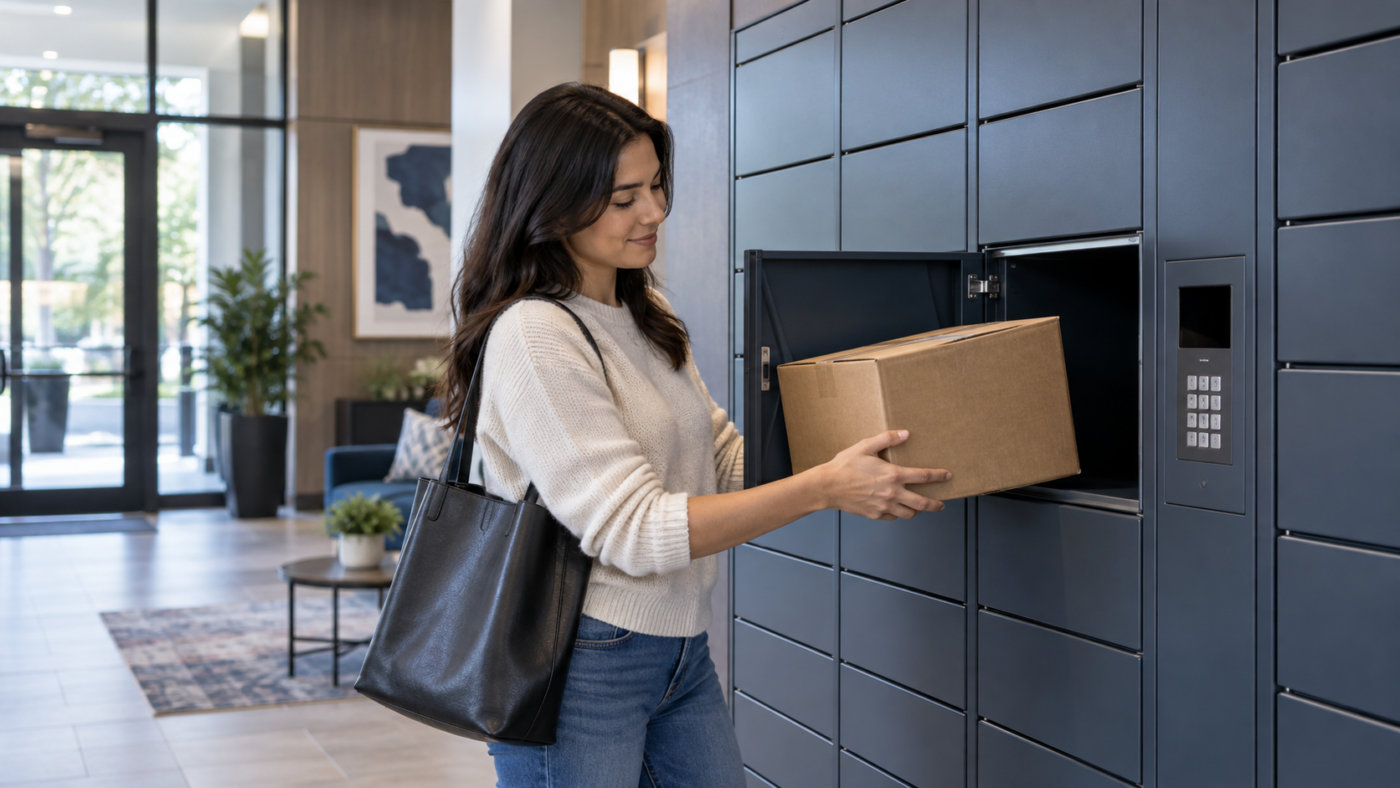
Package lockers
An individual locker compartment can provide a more controlled handoff than an open lobby or shelf. The resident normally receives a notice or access code and retrieves the package from a secured compartment.
Before relying on the system for every delivery, confirm:
- Which carriers can use the lockers
- How and when residents are notified
- What happens when all compartments are full
- Where oversized packages are placed
- How delivery or access errors are reported
- Whether packages must be collected within a specific period
A locker is a strong option only when the carrier uses it and the resident retrieves the package before capacity or holding-time problems arise.
Front desk, concierge, or management office
A staffed location may provide a useful handoff, but do not assume it accepts every delivery. Some desks accept packages only during certain hours, refuse large items, exclude particular carriers, or require the resident’s name to match a building record.
Confirm the policy before naming the desk in your delivery instructions. If evening or weekend deliveries arrive after the desk closes, create a separate backup plan.
Access-controlled package rooms
If your building uses a package room, learn how both carriers and residents enter. Also ask how deliveries are logged and how the property handles packages left outside the secured area.
Retrieve packages promptly even when the room is locked. A shared room still contains many deliveries in one place and may be accessible to a large number of people.
Move Higher-Risk Deliveries Away From the Building
If the building does not offer a dependable secure handoff, remove the vulnerable lobby or hallway from the delivery route for higher-risk shipments.
Depending on the retailer, carrier, and individual shipment, available options may include:
- A retailer-operated locker or pickup counter
- A carrier-authorized pickup location
- A hold at a carrier facility
- Delivery to a trusted person who has agreed to receive the package
- A permitted workplace delivery
- A delivery date when someone can accept the package
- A signature requirement for a valuable shipment
Carrier options and shipment eligibility can change. UPS My Choice currently provides delivery alerts and eligible delivery-management options, including directions about where to leave a package and certain Access Point or hold choices. FedEx Delivery Manager currently offers alerts, eligible retail-location redirects, delivery instructions, and vacation holds.
Some shippers restrict recipient changes, and not every package qualifies for every option. Check the available choices early rather than waiting until the package is already out for delivery.
Write Apartment-Specific Delivery Instructions
Good apartment delivery instructions identify one approved destination and the simplest safe way to reach it. They should not ask the driver to guess which entrance, office, or package area you mean.
A useful structure is:
Please deliver to [approved location] through [correct entrance]. Use [necessary callbox or location detail]. Do not leave the package [unsafe location].
Front-desk example
Please deliver to the staffed front desk inside the main lobby. Use the entrance on Oak Street. Do not leave packages outside the building.
Package-locker example
Please deliver to the building’s package lockers inside the main lobby. Enter through the delivery entrance beside the leasing office.
Direct-to-unit example
After entering through the approved main entrance, please leave the package at Apartment 4B. Do not leave it in the open lobby.
Request only locations that the building permits and the driver can reach safely. Do not place unnecessary personal or building-access information in a general note. If an access code is required, follow the property’s procedure and use the carrier or retailer field intended for that information.
Delivery instructions are requests, not guarantees. Access problems, package size, signature requirements, shipper restrictions, and carrier procedures can affect where a shipment is left.
For current carrier-specific steps and more wording examples, see Package Delivery Instructions: What to Write for Amazon, UPS, FedEx & USPS.
Reduce the Time Packages Sit Unattended
Even a good delivery location becomes less secure when packages remain there for hours or days. Use more than one notification source when possible:
- Retailer order notifications
- Carrier tracking and delivery alerts
- Package-locker or package-room notifications
- Building-app or front-desk messages
- Permitted video-doorbell alerts for direct-to-unit deliveries
Do not assume that every alert means the same thing. A carrier’s delivered notice may mean the package reached the property, while a separate building notice may mean it has been logged and is ready for pickup.
Create a simple household routine. Decide who normally retrieves deliveries, who serves as the backup, and how roommates or family members communicate that a package has already been collected. This can prevent both prolonged exposure and confusion about whether a package is actually missing.
If you will be away, do not rely on a normal daily routine. Redirect, hold, postpone, or arrange retrieval before the delivery occurs. For help choosing among these options, see how to protect deliveries when no one is home.
The broader Secure Package Delivery Guide explains how delivery timing, alternate locations, and backup planning work together.
Cameras and Video Doorbells: What Residents Can Control
A camera or video doorbell may provide alerts and help document what happened near your unit. In an apartment or condo, permission and placement must come first.
Before installing anything:
- Check the lease, condo-association rules, and written building policies.
- Ask whether exterior door hardware, adhesive mounts, battery-powered devices, or hallway recording are permitted.
- Obtain written approval when the property requires it.
- Keep the view focused on your permitted doorway and package area rather than trying to monitor a broad common space.
- Confirm how the device will be removed without damaging the door, trim, or wall.
A battery-powered or no-drill device is not automatically allowed just because it is removable. Building rules can address appearance, mounting, wireless devices, recording, and common-area privacy separately.
Where a doorbell is permitted, choose it for the actual job: seeing the location where packages are left and providing useful alerts. The site’s smart-doorbell comparison for package protection can help you evaluate package visibility and monitoring features after you have confirmed what your building allows.
If you already have a permitted device, use the Security Camera Placement Guide to check whether its viewing angle captures the package area. Apply those checks only within the location and field of view your building permits.
Remember the limitation: a camera watches or records. It does not provide the physical protection of an individual locker, staffed handoff, or secure pickup location.
What to Ask Your Property Manager, Landlord, or Condo Association
You do not need to make legal claims or demand a specific security system to ask useful operational questions. Start by finding out how the building’s current process is supposed to work.
- Where are delivery drivers officially supposed to leave packages?
- Which entrance should carriers use?
- How are carriers admitted when the exterior door is locked?
- Does the front desk or office accept packages, and during which hours?
- Which carriers can use the building’s package lockers or package room?
- What happens when lockers are full?
- Where are oversized packages placed?
- How and when are residents notified?
- Who can access the package room?
- What should a resident do when a package is marked delivered but cannot be located?
- How should recurring theft or delivery problems be documented and reported?
- What cameras, video doorbells, mounts, or other devices are residents permitted to install?
Use the answers to correct your delivery instructions and decide which shipments need an off-site or signature-required plan.
Create Three Separate Delivery Plans
One delivery method does not have to handle every order. A more reliable routine uses different levels of protection based on the package and your schedule.
Plan 1: Everyday deliveries
- Use the building’s normal approved package location.
- Keep delivery instructions short and current.
- Turn on carrier and building alerts.
- Retrieve the package promptly.
Plan 2: High-value or sensitive deliveries
- Use a secure locker, staffed handoff, carrier hold, or approved pickup location.
- Consider a signature requirement when available and practical.
- Confirm the recipient name and identification requirements.
- Do not rely on an open lobby, hallway, or package-room overflow area.
Plan 3: Vacation, holiday, or high-volume periods
- Pause or reschedule orders when possible.
- Use carrier holds or alternate pickup locations.
- Arrange a trusted person to retrieve expected deliveries.
- Check whether holiday volume changes the building’s locker or overflow procedure.
- Review saved delivery instructions before leaving.
If you want to put these routines into writing, the Complete Porch Pirate Protection Toolkit includes a Delivery Instructions Builder, Delivery Zone Planner, Household Package Routine Planner, High-Value Package Plan, Vacation and Holiday Delivery Planning Tools, Delivery Account Setup Checklist, and a test for evaluating what happens across actual deliveries.
If Your Package Is Already Missing
Do not immediately assume that a package was stolen. Check the full tracking details, delivery photograph, front desk, package room, locker system, management office, household members, and nearby units when appropriate.
If tracking says delivered but you cannot locate the package, follow Package Says Delivered but It’s Not Here? What to Do Next. If the available evidence indicates that the package was taken after delivery, use My Package Was Stolen — What Do I Do Now?.
Apartment and Condo Package-Theft Prevention FAQs
Are apartment package lockers secure?
An individual locked compartment generally provides a more controlled handoff than an open lobby or shared shelf. Its usefulness still depends on carrier participation, correct scanning, available capacity, reliable notifications, and secure procedures for oversized packages and overflow.
What if packages are being stolen from the package room?
Retrieve deliveries promptly and document each incident or recurring failure, including the carrier, delivery time, reported location, notification time, and whether the package was left outside the secured room. Ask management about access records, overflow procedures, incident reporting, and any available footage. Use an individual locker, staffed handoff, carrier hold, or off-site pickup for higher-risk packages until the problem is resolved.
Can I install a video doorbell outside my apartment?
That depends on the lease, building or condo-association rules, installation method, and applicable requirements. Check the written policies and obtain any required permission before installing or recording. A removable or battery-powered device is not automatically permitted.
What should apartment delivery instructions say?
Name one approved destination, the correct entrance, and only the access or location details the driver needs. For example: “Please deliver to the staffed front desk inside the main lobby. Use the Oak Street entrance. Do not leave packages outside the building.” Keep the instruction consistent with the building’s actual procedure.
Is front-desk delivery safer than delivery to my apartment door?
It may be when the desk is staffed, accepts the carrier and package, records deliveries, and releases them only through an established procedure. Direct-to-unit delivery may be preferable in some controlled-access buildings. Compare the actual exposure time, access, staffing, and pickup process instead of assuming one option is always safer.
What if my building has no lockers and does not accept packages?
Use accurate direct-to-unit instructions only when the carrier can enter and the building permits that delivery method. For important packages, consider a retailer locker, carrier pickup location, hold option, signature arrangement, or delivery to a trusted approved address.
Bottom Line
The best apartment or condo package-security plan starts with one question: Where does the package become unsecured?
If it happens outside the entrance, fix the approved access instructions or move important deliveries off-site. If it happens in the lobby or package room, use the most controlled building option available and retrieve packages quickly. If it happens outside your unit, combine alerts with permitted monitoring and a safer plan for valuable deliveries.
You may not control the entire building, but you can control which delivery methods you use, how clearly you communicate the destination, how long packages remain unattended, and when a shipment deserves a more secure handoff.
For a structured review, use the free 15-Minute Porch & Package Security Checkup alongside this guide. Focus on the delivery habits and areas you control, and bring questions about shared spaces to building management.